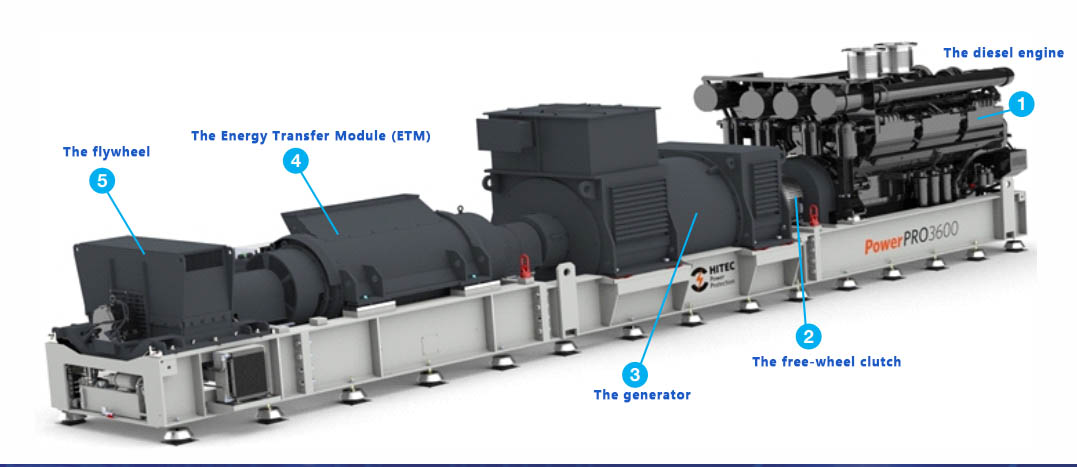
MỘT nguồn điện dự phòng quay (RUPS) là một loại UPS sử dụng động cơ-máy phát và quán tính quay để cung cấp nguồn điện liên tục, ổn định cho các tải quan trọng. Không giống như các hệ thống UPS tĩnh thông thường dựa vào các linh kiện điện tử bán dẫn và pin, công nghệ UPS quay lưu trữ năng lượng bằng cơ học và truyền tải điện năng thông qua một máy quay.
Khi động cơ diesel được tích hợp vào hệ thống này, nó sẽ trở thành một nguồn điện dự phòng quay bằng diesel—thường được gọi là UPS quay dieselThiết kế lai này kết hợp bộ lưu điện UPS dựa trên bánh đà với máy phát điện diesel để cung cấp cả khả năng duy trì hoạt động ngắn hạn và nguồn điện dự phòng dài hạn trong cùng một hệ thống.
Bộ nguồn dự phòng xoay (Rotary Uninterruptible Power Supply - UPS) là gì?
Hệ thống nguồn dự phòng quay (RPM) sử dụng một tổ hợp động cơ-máy phát điện quay liên tục để cách ly các thiết bị nhạy cảm khỏi các nhiễu loạn trong lưới điện. Trong hoạt động bình thường, lưới điện cung cấp điện cho động cơ, động cơ này làm quay máy phát điện cung cấp nguồn điện sạch, ổn định cho tải. Một bánh đà được kết nối với hệ thống lưu trữ năng lượng động học.
Nếu nguồn điện lưới giảm hoặc không ổn định, bánh đà sẽ tiếp tục vận hành máy phát điện trong vài giây. Khoảng thời gian ngắn này cho phép hệ thống hoạt động tạm thời cho đến khi nguồn năng lượng dự phòng, chẳng hạn như động cơ diesel, tiếp quản mà không gây gián đoạn tải.
Bộ nguồn dự phòng không gián đoạn (UPS) kiểu quay sử dụng động cơ diesel là gì?
MỘT nguồn điện dự phòng quay bằng diesel Hệ thống này tích hợp trực tiếp động cơ diesel với hệ thống UPS quay. Khi nguồn điện lưới bị mất, bánh đà sẽ cung cấp năng lượng tức thì trong khi động cơ diesel khởi động và đồng bộ hóa. Sau khi động cơ diesel hoạt động, nó sẽ cung cấp năng lượng cho máy phát điện liên tục, cho phép UPS cung cấp điện trong nhiều giờ hoặc thậm chí nhiều ngày miễn là còn nhiên liệu.
Điều này tạo ra UPS quay diesel Nó tích hợp cả UPS và máy phát điện trong một hệ thống điện thống nhất. Điều này giúp loại bỏ nhu cầu sử dụng các bộ pin lớn và máy phát điện dự phòng riêng biệt, từ đó đơn giản hóa cơ sở hạ tầng điện trong các cơ sở lớn.
Nguyên lý hoạt động của bộ lưu điện UPS quay bằng động cơ diesel
- Trong điều kiện hoạt động bình thường, nguồn điện lưới sẽ cung cấp năng lượng cho tổ máy phát điện.
- Bánh đà tích trữ năng lượng động học trong khi tải nhận được nguồn điện sạch, đã được điều chỉnh.
- Nếu nguồn điện lưới bị gián đoạn, bánh đà sẽ ngay lập tức duy trì sự quay của máy phát điện.
- Động cơ diesel khởi động và đồng bộ với máy phát điện.
- Khi đã khởi động, động cơ diesel sẽ cung cấp năng lượng liên tục cho tải.
Trình tự này diễn ra nhanh đến mức các thiết bị được kết nối không bị gián đoạn, do đó rất phù hợp cho các ứng dụng nguồn điện quan trọng.
Ưu điểm chính của hệ thống UPS quay diesel
Hệ thống nguồn dự phòng không gián đoạn quay bằng động cơ diesel mang lại một số ưu điểm độc đáo:
- Không có các ngân hàng pin lớn. – Năng lượng được lưu trữ bằng cơ học trong bánh đà chứ không phải bằng hóa học trong pin.
- Khả năng ngắn mạch cao – Hệ thống quay có thể xử lý dòng điện khởi động lớn từ động cơ và thiết bị công nghiệp.
- Thời gian chạy dài – Chỉ cần có nhiên liệu diesel, hệ thống có thể tiếp tục hoạt động.
- Thiết kế tích hợp – Hệ thống UPS và máy phát điện được kết hợp thành một, giúp giảm độ phức tạp của hệ thống.
Những hạn chế so với hệ thống UPS tĩnh
Mặc dù có nhiều ưu điểm, hệ thống UPS quay bằng động cơ diesel không phù hợp với mọi ứng dụng:
- Kích thước lớn hơn – Động cơ, bánh đà và máy phát điện cần nhiều không gian hơn.
- Chi phí bảo trì cao hơn – Các bộ phận cơ khí và động cơ diesel cần được bảo dưỡng định kỳ.
- Hiệu suất điện thấp hơn – So sánh với các hệ thống UPS bán dẫn hiện đại.
- tiếng ồn và khí thải – Động cơ diesel cần được xử lý âm thanh và thông gió.
Nơi sử dụng nguồn điện dự phòng quay bằng diesel.
MỘT UPS quay diesel Thường được tìm thấy trong các môi trường công nghiệp hoặc các hoạt động quan trọng quy mô lớn, nơi đòi hỏi mức công suất cao và độ tin cậy bền bỉ:
- Các trung tâm dữ liệu và trung tâm viễn thông lớn
- Sân bay và cơ sở hạ tầng giao thông
- Các cơ sở dầu khí và hóa dầu
- Nhà máy thép và sản xuất công nghiệp nặng
- các trạm biến áp và cơ sở hỗ trợ lưới điện
So sánh UPS quay diesel và UPS tĩnh
Các trung tâm dữ liệu hiện đại và môi trường CNTT thương mại thường sử dụng hệ thống UPS trực tuyến tĩnh dựa trên thiết bị điện tử công suất và pin. Chúng cung cấp hiệu suất cao hơn, kích thước nhỏ gọn hơn và chất lượng điện năng tốt hơn cho các thiết bị kỹ thuật số nhạy cảm. Tuy nhiên, hệ thống nguồn dự phòng không gián đoạn (UPS) quay bằng diesel vẫn hấp dẫn đối với các tải rất lớn, môi trường khắc nghiệt hoặc các cơ sở đã vận hành cơ sở hạ tầng máy phát điện diesel quy mô lớn.
Phần kết luận
MỘT nguồn điện dự phòng quay và phiên bản chạy bằng động cơ diesel của nó— nguồn điện dự phòng quay bằng diesel—đại diện cho một phương pháp mạnh mẽ và đã được chứng minh để bảo vệ nguồn điện quan trọng. Mặc dù công nghệ UPS tĩnh chiếm ưu thế trong môi trường CNTT hiện đại, UPS quay diesel Các hệ thống này tiếp tục đóng vai trò quan trọng trong công nghiệp nặng, các công ty điện lực và các cơ sở quy mô lớn đòi hỏi công suất cao, độ bền cơ học và nguồn điện dự phòng lâu dài.
 VI
VI  EN
EN  ES
ES  ZH
ZH  ID
ID  MS
MS  PT
PT  UK
UK