Todo comprador de UPS se depara com essa escolha. A diferença vai muito além do tamanho e do preço — ela determina o desempenho do seu sistema sob condições reais de uso, sua durabilidade e se ele consegue atender às demandas específicas da sua aplicação.
Índice
- Como cada tecnologia funciona na prática
- Principais diferenças técnicas explicadas
- Tabela completa de comparação direta
- Onde os UPS de baixa frequência se destacam
- Onde os sistemas UPS de alta frequência se destacam
- Qual escolher de acordo com o setor e a aplicação?
- Custo total de propriedade: uma comparação realista
- Guia de decisão: 5 perguntas a fazer antes de escolher
1. Como cada tecnologia funciona na prática
Os termos “alta frequência” e “baixa frequência” referem-se à frequência de comutação dos componentes internos de conversão de energia — e não à frequência de saída do nobreak, que é sempre de 50 Hz ou 60 Hz, independentemente do tipo. Compreender essa distinção é fundamental para escolher o modelo correto.
UPS de baixa frequência (UPS LF)
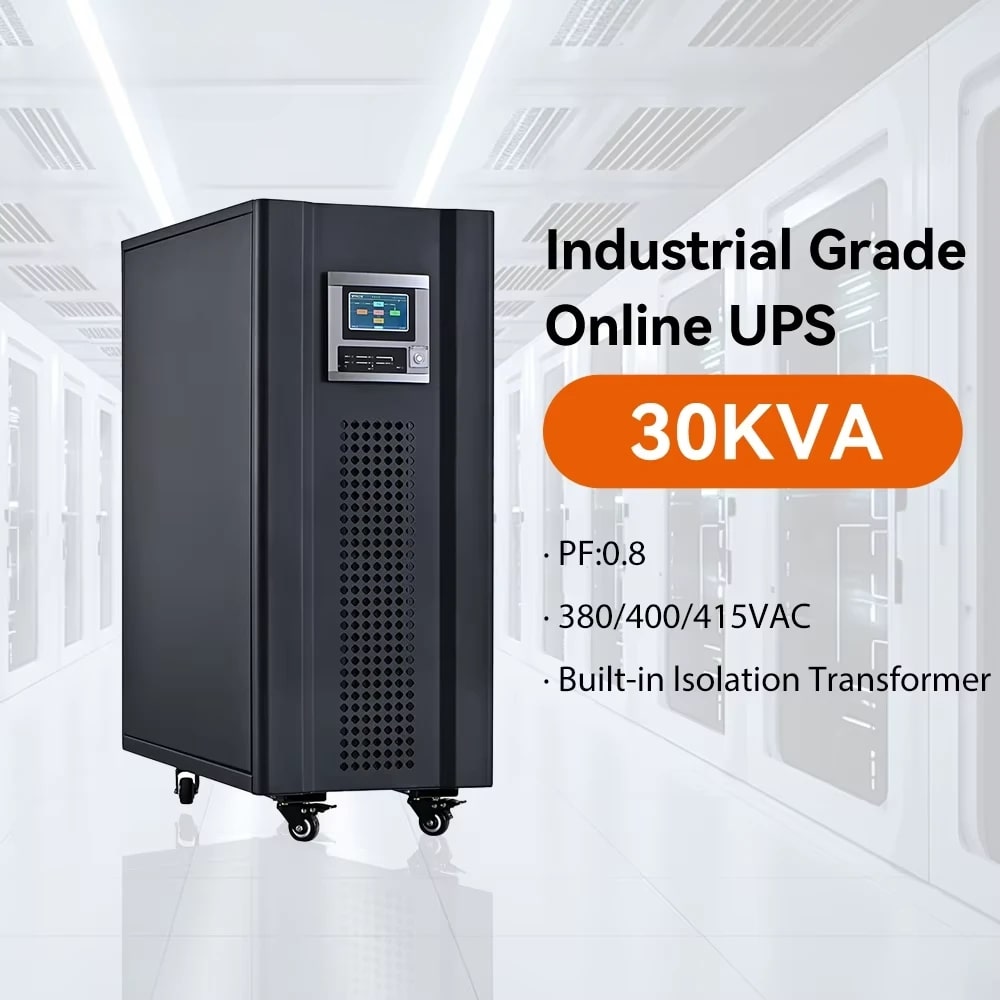
Um sistema UPS de baixa frequência utiliza um grande transformador de frequência de linha como núcleo do seu circuito de conversão de energia. O transformador opera na frequência da rede elétrica — 50 Hz ou 60 Hz — razão pela qual esses sistemas também são chamados de UPS de baixa frequência. baseado em transformador ou frequência industrial UPS.
A arquitetura normalmente envolve três etapas:
- Estágio retificador: Converte a energia CA da rede elétrica em CC, utilizando tecnologia baseada em SCR (Retificador Controlado de Silício) ou tiristores. Esses componentes são extremamente robustos e toleram altas correntes de pico sem sofrer danos.
- Barramento de bateria/CC: O barramento CC conecta-se diretamente ao banco de baterias. Durante uma falha na rede elétrica, a bateria descarrega através do inversor sem atraso de comutação.
- Estágio inversor com transformador de saída: O inversor produz uma saída CA regulada, que passa por um transformador de isolamento de baixa frequência antes de chegar à carga. Este transformador proporciona isolamento galvânico, regulação de tensão e proteção significativa contra ruídos e falhas elétricas.
O transformador de isolamento é o elemento definidor. Ele separa fisicamente os circuitos de entrada e saída, o que tem implicações profundas para a proteção de carga, tolerância a falhas e capacidade de lidar com cargas não lineares e reativas.
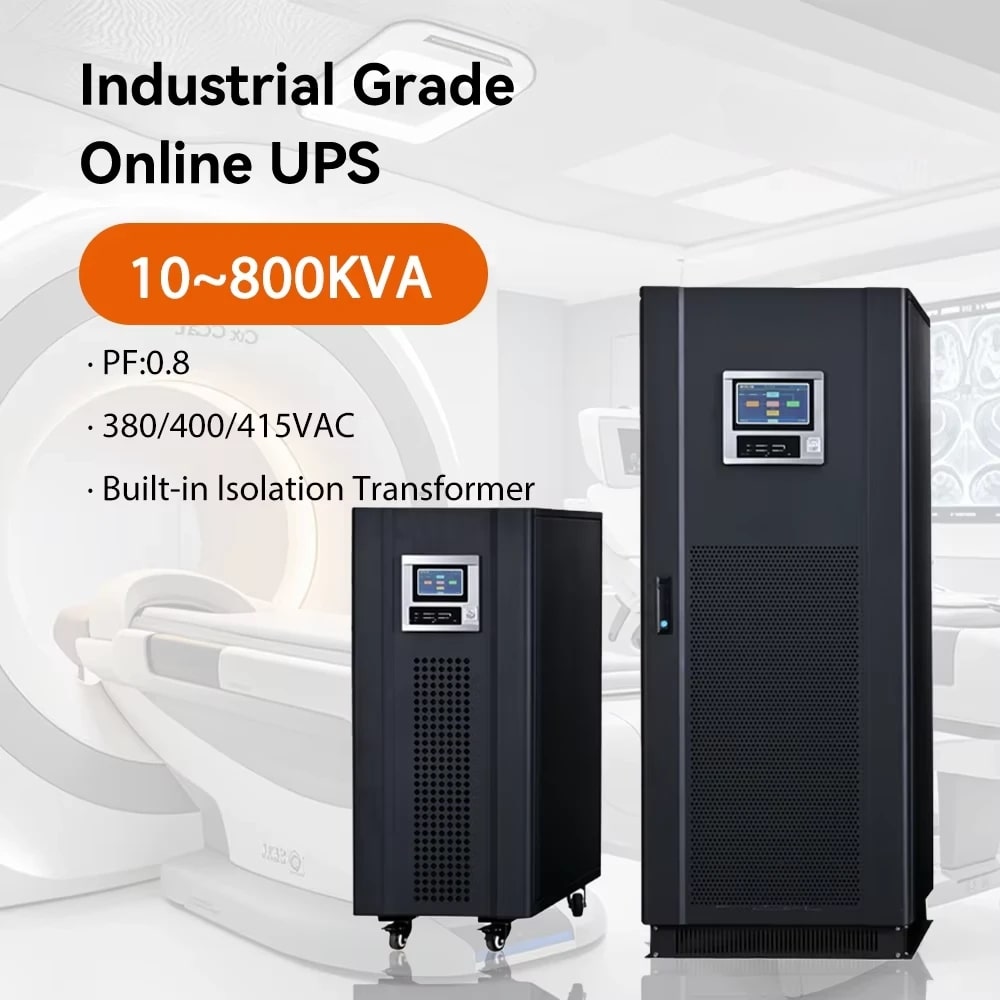
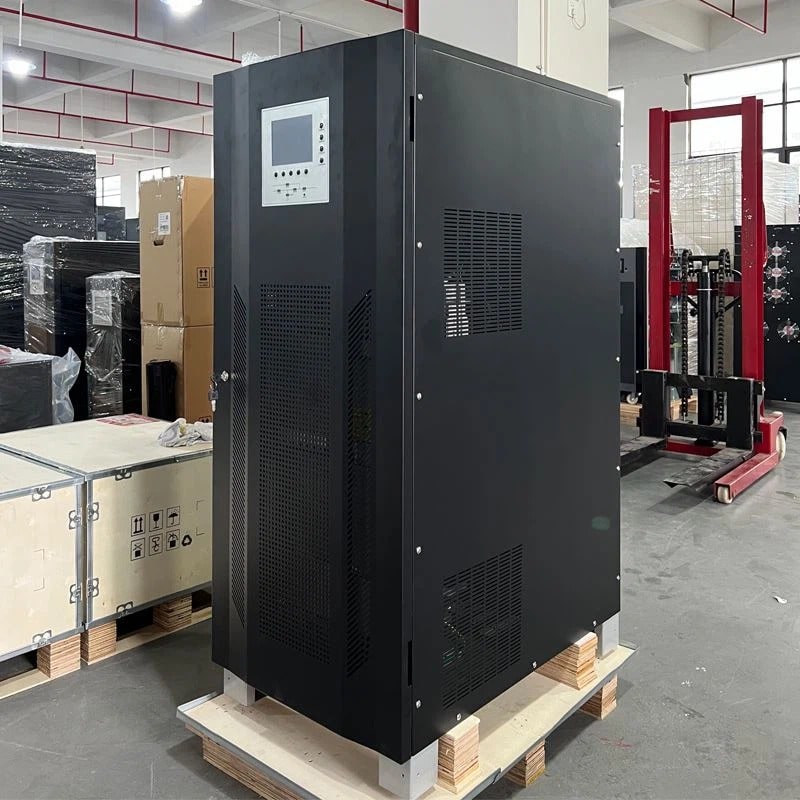
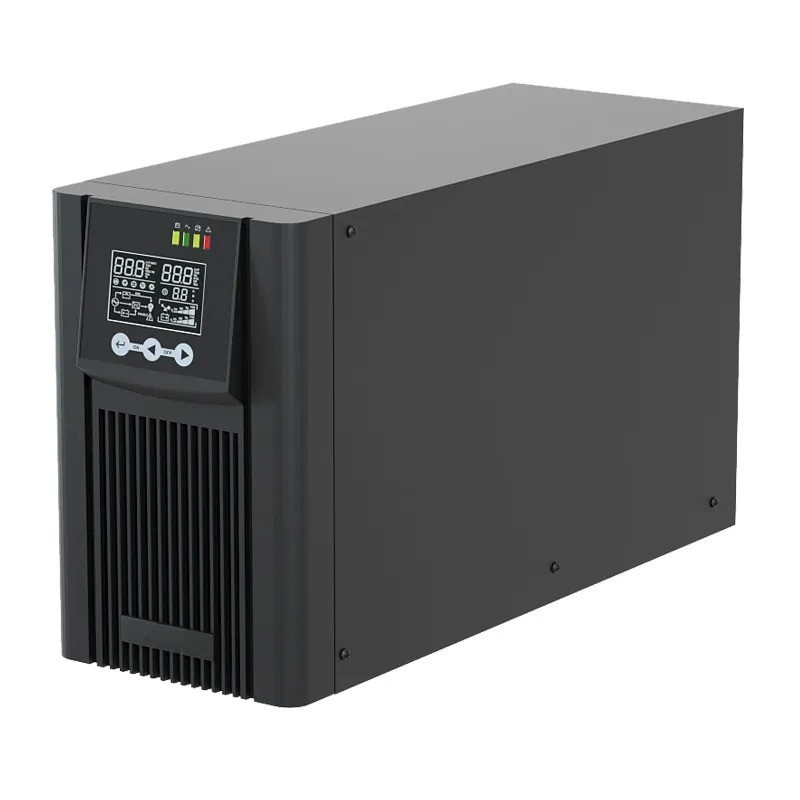
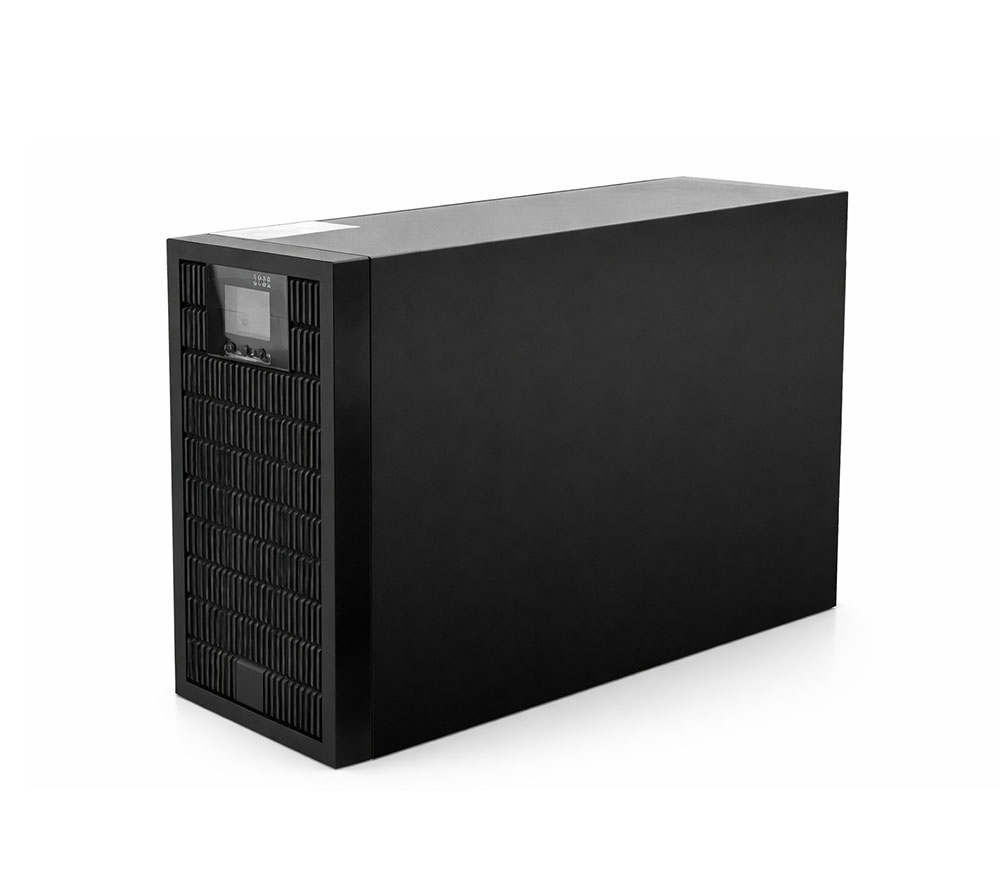
UPS de baixa frequência
UPS de alta frequência (UPS HF)
Um sistema UPS de alta frequência substitui o transformador de frequência da rede elétrica por dispositivos semicondutores de comutação rápida — tipicamente IGBTs (Transistores Bipolares de Porta Isolada) — que operam na faixa de 10 a 20 kHz ou superior. Alguns projetos são totalmente sem transformador; outros utilizam um pequeno transformador de alta frequência para isolamento, que é muito mais leve do que um equivalente de frequência da rede elétrica.
A arquitetura normalmente envolve:
- Retificador de front-end ativo (AFE): Utiliza a comutação IGBT para converter corrente alternada (CA) em corrente contínua (CC) com alta correção do fator de potência (PFC), normalmente atingindo um fator de potência de entrada de 0,99 ou melhor. Isso reduz drasticamente a distorção harmônica realimentada à fonte de alimentação.
- Interface de barramento CC e bateria: A bateria se conecta por meio de um conversor CC-CC que gerencia os ciclos de carga/descarga de forma eficiente. Em alguns projetos, a tensão do barramento da bateria é menor que a do barramento CC, permitindo o uso de conjuntos de baterias menores.
- Inversor IGBT: Gera corrente alternada (CA) de saída usando modulação por largura de pulso (PWM) em alta frequência, que é então filtrada para uma onda senoidal limpa de 50/60 Hz. Sem um transformador de saída de frequência da rede, a saída do inversor vai diretamente — ou através de um pequeno transformador de alta frequência — para a carga.
💡 O que “alta frequência” realmente significa para o comprador
A alta frequência de comutação permite o uso de componentes passivos muito menores (indutores, capacitores, transformadores), razão pela qual os sistemas UPS de alta frequência são tipicamente 30 a 50% mais leves e menores do que os sistemas de baixa frequência equivalentes. Isso também possibilita uma resposta mais rápida às variações de carga e uma regulação mais precisa da tensão de saída. A desvantagem é que os componentes de comutação IGBT de alta velocidade são mais sensíveis a estresse elétrico do que os tiristores robustos usados em projetos de baixa frequência. Para uma análise mais detalhada de como os IGBTs funcionam dentro de um UPS, consulte nosso artigo sobre Tecnologia IGBT em sistemas UPS.
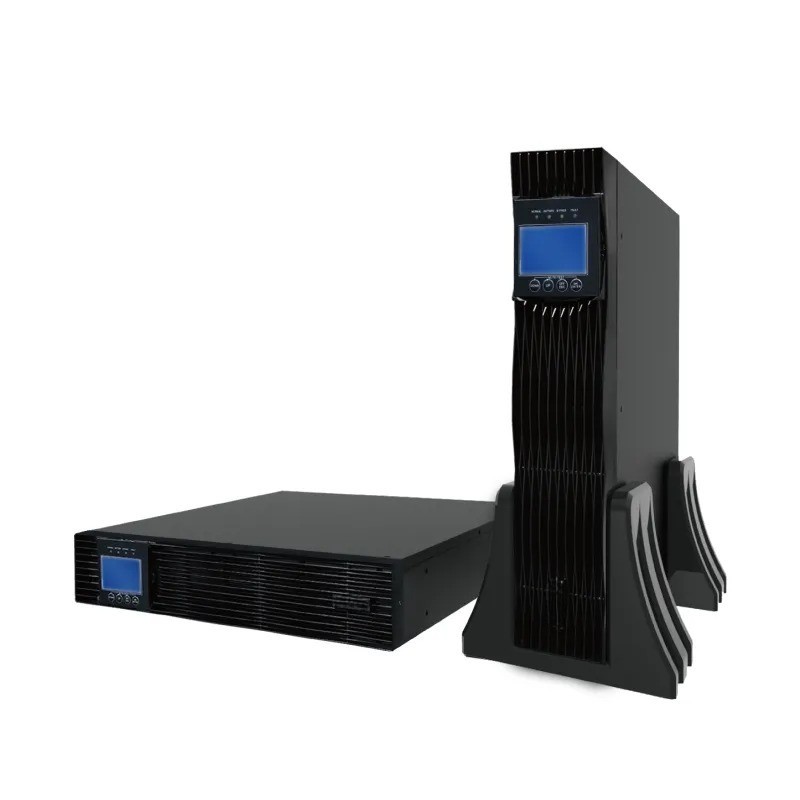
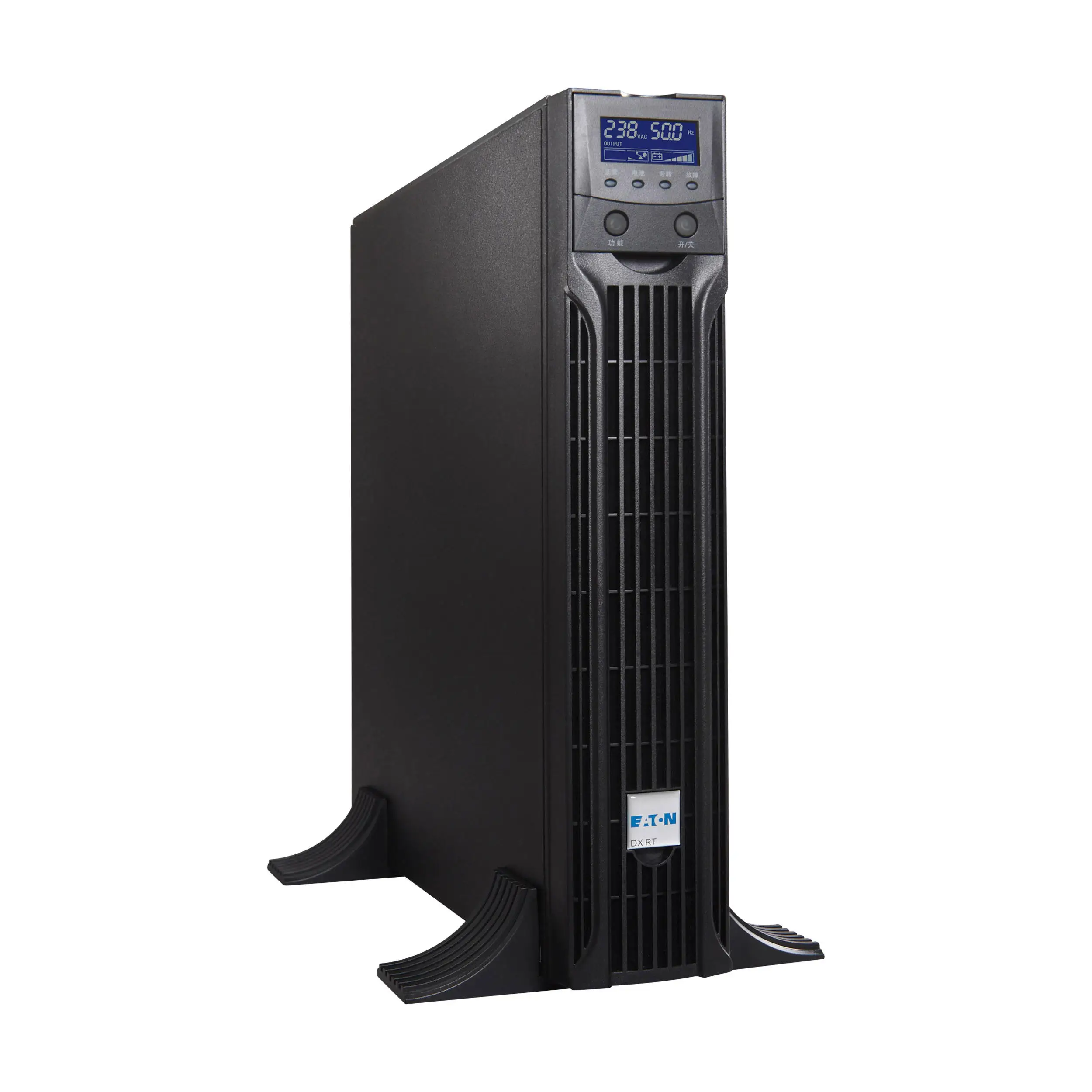
UPS de alta frequência
2. Principais diferenças técnicas explicadas
Capacidade de sobrecarga e curto-circuito
Essa é a diferença mais importante na prática para compradores industriais.
Um UPS de baixa frequência — graças ao seu robusto retificador de tiristores e transformador de saída — normalmente consegue lidar com sobrecargas de 150% por 60 segundos e correntes de curto-circuito de 300% ou mais por vários ciclos. Quando um motor conectado é acionado, um disjuntor a jusante desarma ou ocorre uma falha, o UPS de baixa frequência não se abala. O transformador limita naturalmente a taxa de aumento da corrente (di/dt), protegendo tanto o UPS quanto os equipamentos a jusante.
Um sistema UPS de alta frequência utiliza IGBTs, que são muito mais sensíveis a sobrecorrente. A maioria dos sistemas de alta frequência são dimensionados para sobrecargas de 125% por 60 segundos e correntes de curto-circuito de 125–150% antes de transferir para o modo de bypass. Ultrapassar esses limites pode causar falhas nos IGBTs. Isso não é um defeito, mas sim uma característica fundamental da tecnologia de semicondutores.
⚠️ Por que isso é importante na prática
Correntes de partida de motores, correntes de pico em transformadores e a eliminação de falhas a jusante geram picos de corrente muito acima da carga nominal. Em uma fábrica ou instalação industrial, esses eventos ocorrem rotineiramente. Um nobreak de baixa frequência (LF UPS) os absorve sem problemas. Um nobreak de alta frequência (HF UPS) protegendo a mesma carga pode alternar para o bypass repetidamente — ou, no pior dos casos, sofrer danos nos IGBTs — se o perfil de carga não tiver sido cuidadosamente avaliado na fase de projeto.
Fator de potência de entrada e distorção harmônica
Os sistemas UPS tradicionais de baixa frequência com retificadores de tiristores consomem corrente em pulsos, gerando distorção harmônica de entrada significativa — tipicamente 25–30% Distorção Harmônica Total (THDi)Isso pode interferir com outros equipamentos sensíveis na mesma fonte de alimentação e pode exigir filtros de entrada ou mitigação de harmônicos em instalações onde a qualidade da energia é rigorosamente controlada.
Os modernos sistemas UPS de alta frequência com retificadores de entrada ativa (AFE) atingem uma THDi de entrada de menos de 3% e fatores de potência de entrada de 0,99 ou melhorIsso significa que o UPS consome corrente quase senoidal da fonte de alimentação, minimizando o estresse harmônico na infraestrutura elétrica do edifício e no gerador conectado.
Nota: Os projetos modernos de UPS de baixa frequência incorporam cada vez mais estágios de retificação ativa que reduzem significativamente sua presença de harmônicos. A suposição de que "baixa frequência = harmônicos altos" é menos universal do que já foi — sempre verifique a folha de dados específica do produto.
Eficiência
Os transformadores de frequência de linha possuem perdas inerentes no núcleo, presentes sempre que o UPS está energizado — independentemente da carga. É por isso que os sistemas UPS de baixa frequência tradicionais normalmente atingem eficiências de 88–93% Com carga máxima, diminuindo ainda mais com cargas parciais.
Os sistemas UPS de alta frequência, ao eliminarem as perdas do transformador de frequência da rede, normalmente atingem eficiências de 94–97% Em plena carga, e mantém boa eficiência em cargas parciais (60–80% da potência nominal). Ao longo da vida útil de uma grande instalação de UPS, essa diferença de eficiência se traduz em economias significativas nos custos de energia — um tópico explorado em detalhes em nosso artigo sobre Eficiência do sistema UPS.
Para um UPS de 100 kVA operando com carga de 80%, uma melhoria de eficiência de 4% se traduz em aproximadamente Economia de 28.000 kWh por ano. — uma diferença significativa nos custos operacionais em grande escala.
Isolamento galvânico
O transformador de saída em um UPS de baixa frequência fornece isolamento galvânico — uma separação elétrica física entre a fonte de alimentação de entrada e a carga de saída. Isso tem diversas consequências importantes:
- Ruídos de modo comum e transientes na fonte de alimentação são bloqueados, impedindo que cheguem à carga.
- As correntes de falha à terra no lado da saída são contidas sem afetar a entrada.
- O UPS pode suportar diferentes configurações de aterramento (TN-S, TT, IT) independentemente na entrada e na saída.
- Os requisitos de isolamento de grau médico (IEC 60364-7-710) são atendidos com mais facilidade.
Os sistemas UPS de alta frequência sem um transformador de saída de frequência de linha não fornecem esse isolamento por padrão. Alguns projetos incluem um transformador de isolamento de alta frequência, mas suas características diferem de uma unidade de frequência de linha. Para aplicações médicas, petroquímicas e em certos setores industriais onde o isolamento é um requisito regulamentar ou de segurança, essa distinção pode ser decisiva.
Dimensões, peso e área de instalação
O transformador de frequência da rede em um UPS de baixa frequência pode representar de 30 a 50% do peso total da unidade. Um UPS de baixa frequência de 100 kVA pode pesar de 400 a 700 kg. O UPS de alta frequência equivalente normalmente pesa de 150 a 250 kg. Essa diferença tem implicações diretas na distribuição de peso no piso, no transporte, na logística de instalação e na praticidade da montagem em rack.
Para instalações onde o espaço é limitado — centros de dados, salas de telecomunicações, sistemas de energia modulares em contêineres — o formato compacto dos UPS de alta frequência é uma verdadeira vantagem. Para salas de comutação e subestações industriais onde a carga no piso não é uma restrição, o tamanho de uma unidade de baixa frequência raramente é um fator decisivo.
3. Comparação completa frente a frente
| Parâmetro | UPS de baixa frequência | UPS de alta frequência |
|---|---|---|
| Tecnologia central | Retificador de tiristor/SCR + transformador de frequência de linha | Comutação IGBT em 10–20 kHz, sem transformador ou com pequeno transformador de alta frequência. |
| Eficiência típica | 88–93% em carga máxima | 94–97% em carga máxima |
| Capacidade de sobrecarga | 150% / 60s; 300%+ curto-circuito | 125% / 60s; curto-circuito 125–150% |
| Distorção harmônica de entrada (THDi) | 25–30% (tiristor); <5% (retificador ativo) | <3% (retificador AFE) |
| fator de potência de entrada | 0,8–0,9 (tiristor); ~0,99 (retificador ativo) | ~0.99 |
| Isolamento galvânico | Sim — padrão | Não é padrão (transformador de alta frequência opcional) |
| Peso (exemplo de 100 kVA) | 400–700 kg | 150–250 kg |
| Tamanho/área ocupada | Grande | Compactar |
| Custo de capital | Mais alto | Mais baixo |
| Vida útil | 15 a 20 anos ou mais | 10 a 15 anos |
| Manutenibilidade | Componentes mais simples; reparáveis em campo | Placas de circuito impresso complexas; frequentemente substituição em nível de placa. |
| Tolerância de carga reativa/motor | Excelente | Moderado — requer dimensionamento cuidadoso |
| Compatibilidade do gerador | Bom — tolerante à instabilidade do gerador | Compatível com AFE; modelos mais antigos podem apresentar problemas. |
| Montável em rack | Não (somente modelos de chão acima de ~10 kVA) | Sim — disponível em formatos para montagem em rack. |
| Ideal para | Indústria, manufatura, medicina, serviços públicos, petróleo e gás. | Centros de dados, salas de TI, escritórios, telecomunicações |
4. Onde os UPS de baixa frequência se destacam
Ambientes industriais pesados e de manufatura
Os ambientes de produção em fábricas são eletricamente hostis. Acionamentos de motores, inversores de frequência (VFDs), equipamentos de soldagem, máquinas CNC e compressores geram picos de tensão, correntes harmônicas e altas demandas de corrente de partida. A robusta arquitetura baseada em transformador de um UPS de baixa tensão (LF UPS) lida com essas demandas sem problemas. Sua alta tolerância a sobrecargas e curtos-circuitos permite que ele elimine falhas subsequentes sem acionar o bypass, mantendo a continuidade de energia para os sistemas de controle críticos que protege. Para uma visão mais abrangente sobre a proteção de operações de manufatura, consulte nosso artigo sobre Soluções de energia de emergência para fábricas.
Instalações médicas que requerem isolamento galvânico
Hospitais, salas cirúrgicas e centros de diagnóstico por imagem operam sob rigorosas normas de segurança elétrica. A norma IEC 60364-7-710 exige sistemas de TI médicos (sistemas de alimentação isolados) em áreas onde pacientes possam entrar em contato com componentes energizados. Um nobreak de baixa frequência (LF UPS), com seu transformador de isolamento galvânico integrado, é a solução ideal para esses ambientes. O isolamento também protege equipamentos de diagnóstico sensíveis contra interferências de modo comum que poderiam corromper leituras ou causar alarmes falsos. Para um exemplo prático, veja como um Centro de saúde resolveu problemas de queda de tensão Utilizando proteção de energia adequada.
Instalações de petróleo, gás, petroquímica e serviços públicos
A infraestrutura crítica nesses setores exige máxima confiabilidade e mínima intervenção de manutenção. Instalações em locais remotos — plataformas offshore, estações de monitoramento de dutos, edifícios de controle de subestações — necessitam de sistemas UPS que operem de forma confiável por anos entre as visitas de manutenção. A eletrônica de potência mais simples de um UPS de baixa frequência, combinada com sua longa vida útil (mais de 15 a 20 anos), o torna o padrão da indústria para essas aplicações. A capacidade de reparar componentes individuais em campo, em vez de substituir placas de circuito inteiras, também é altamente valorizada em locais remotos ou perigosos.
Instalações trifásicas de alta capacidade
Para grandes sistemas UPS trifásicos acima de 200 kVA, a arquitetura LF oferece confiabilidade comprovada em larga escala. O transformador lida naturalmente com desequilíbrios de carga entre as fases, fornece uma referência de neutro estável e simplifica a integração de grandes bancos de baterias. Muitas concessionárias de energia e operadores industriais especificam a tecnologia LF para suas instalações de maior capacidade justamente por causa desse histórico. Explore nossa gama de produtos. Gama de UPS industriais trifásicos (10–800 kVA) para opções adequadas.
Aplicações típicas de UPS de baixa frequência
5. Onde os UPS de alta frequência se destacam
Centros de dados modernos e infraestrutura de TI
As cargas de TI atuais — servidores, arrays de armazenamento, switches de rede — são quase exclusivamente fontes de alimentação chaveadas com fatores de potência próximos ou iguais à unidade. Elas geram cargas previsíveis e consistentes, sem as características de reatividade e surtos dos equipamentos industriais. Para esses ambientes, o UPS da HF é extremamente adequado: oferece alta eficiência, baixa distorção harmônica na entrada, formato compacto e excelente regulação da tensão de saída para eletrônicos sensíveis. Gama de UPS para redes e servidores (1–10 kVA) Abrange os requisitos mais comuns para salas de TI.
Em data centers de grande escala, a vantagem de eficiência dos UPS de alta frequência é particularmente convincente. Um UPS de alta frequência de 500 kVA operando com eficiência 4% superior à de uma unidade equivalente de baixa frequência economiza aproximadamente 140.000 kWh por ano — uma contribuição significativa para as metas de PUE e redução de custos de energia.
Implantações modulares e escaláveis
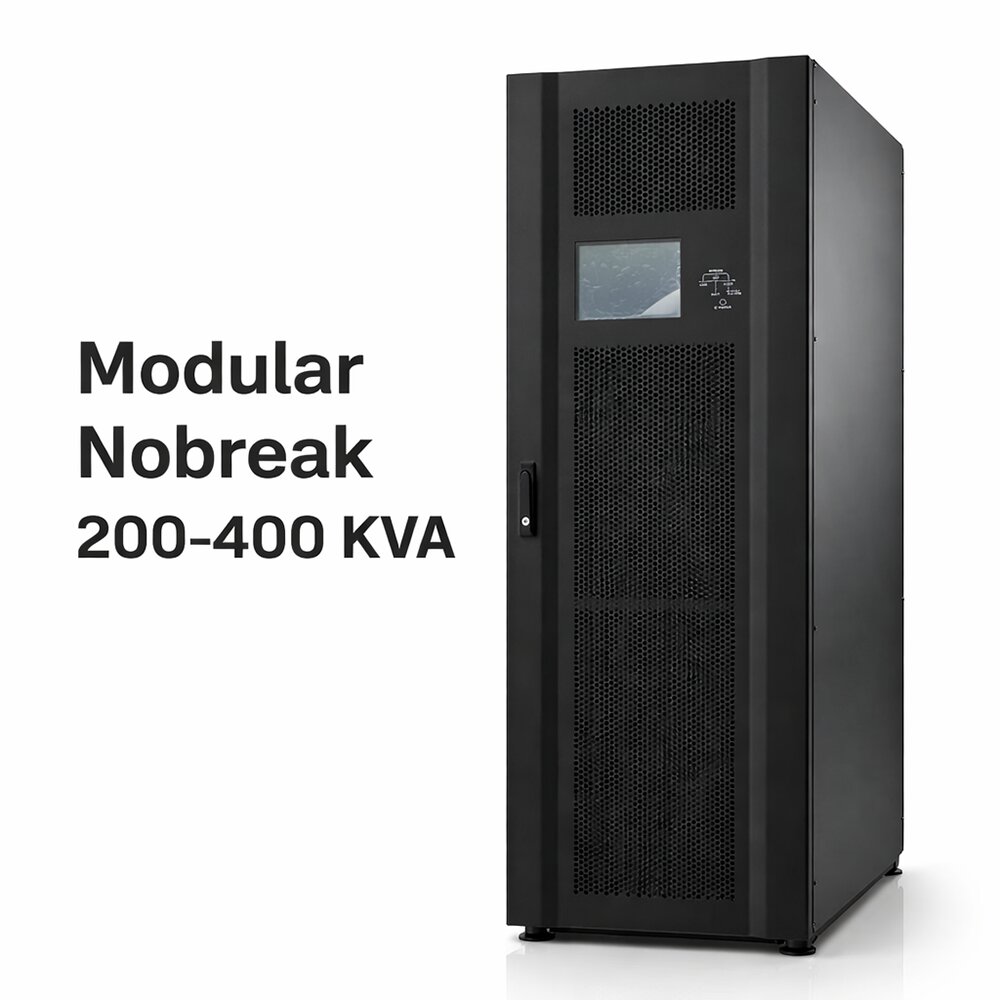
O formato compacto da tecnologia HF possibilitou o desenvolvimento de arquiteturas de UPS modulares — sistemas construídos com módulos de energia hot-swappable que podem ser adicionados ou removidos com a UPS em funcionamento. Isso simplesmente não é viável com projetos baseados em transformadores de frequência de linha. Para organizações que preveem crescimento de carga ou que necessitam de redundância N+1 sem investimento excessivo em capacidade inicial, a UPS HF modular é a tecnologia ideal. Veja nosso gama de UPS modular e nosso artigo comparando UPS modular versus UPS tradicional para empresas em crescimento.
Implantações montadas em racks
Para organizações que precisam de proteção UPS em nível de rack — racks de servidores individuais, salas de equipamentos de rede, instalações de computação de borda — os sistemas UPS para montagem em rack só são viáveis com a tecnologia HF. Um UPS LF de 10 kVA para montagem em rack pesaria várias centenas de quilos e ocuparia a maior parte de um rack padrão. A unidade HF equivalente pesa menos de 30 kg e ocupa de 2 a 4U. Veja nossa Opções de UPS para montagem em rack de 19 polegadas.
Projetos de construção sustentáveis e com foco na eficiência energética
Quando uma organização tem compromissos com a sustentabilidade, obrigações de relatórios de energia ou busca certificação de construção verde, a maior eficiência e o fator de potência de entrada próximo da unidade dos UPS de alta frequência contribuem de forma mensurável para os KPIs de energia. A menor emissão de calor também reduz a carga de refrigeração na sala do UPS, gerando economia secundária com ar condicionado. Para mais informações sobre como reduzir o desperdício de energia por meio de infraestrutura de energia inteligente, consulte nosso artigo sobre infraestrutura de energia mais inteligente.
Aplicações típicas de UPS de alta frequência
6. Qual escolher por setor e aplicação
| Indústria/Caso de Uso | Tipo recomendado | Motivo principal |
|---|---|---|
| Automação de fábrica / CNC | Baixa frequência | Corrente de partida do motor, cargas reativas, tolerância a surtos |
| Hospital / Imagem médica | Baixa frequência | Isolamento galvânico, conformidade com as normas de segurança do paciente |
| Petróleo, gás e petroquímica | Baixa frequência | Longa vida útil, facilidade de manutenção em campo, ambientes severos |
| concessionárias de energia e subestações | Baixa frequência | Confiabilidade, isolamento e compatibilidade com sistemas de proteção por relés. |
| Tratamento de água/esgoto | Baixa frequência | Cargas do motor da bomba, ambientes externos/úmidos |
| Centro de dados (em grande escala) | Alta frequência | Eficiência, tamanho compacto, escalabilidade modular |
| Sala de servidores / Armário de TI | Alta frequência | Perfil de carga compatível com TI, opções de rack, eficiência |
| Estações base de telecomunicações | Alta frequência | Tamanho compacto, baixo peso, alta eficiência |
| Escritórios comerciais | Alta frequência | Custo mais baixo, tamanho reduzido, adequado para cargas de TI. |
| Mistura de TI e indústria leve | Avalie cuidadosamente o perfil de carga. | Cargas de motor presentes → baixa frequência; cargas puramente de TI → alta frequência |
🔗 Para uma comparação direta entre aplicações industriais e comerciais, consulte nosso artigo: Sistemas UPS industriais versus comerciais: selecionando a fonte de alimentação ininterrupta adequada →
7. Custo Total de Propriedade: Uma Comparação Realista
O custo de capital é o custo mais visível, mas raramente o mais importante ao longo da vida útil de um UPS de 10 a 15 anos. Uma análise completa do Custo Total de Propriedade (TCO) deve considerar cinco componentes:
Custo de capital
Um UPS de baixa frequência normalmente custa 15–30% mais do que um UPS de alta frequência comparável no momento da compra. O transformador e os componentes de energia mais robustos justificam esse preço mais elevado. Para uma instalação de 100 kVA, isso pode representar uma diferença de £5.000 a £15.000, dependendo dos produtos específicos.
Custo de energia
Uma vantagem de eficiência de 4% em um UPS de 100 kVA funcionando continuamente se traduz em aproximadamente $2.800–$4.200 por ano em economia de eletricidade (a $0,10–$0,15/kWh). Ao longo de 10 anos, isso compensa facilmente a diferença no custo de capital em favor do HF — assumindo um perfil de carga IT onde a vantagem de eficiência se mantém. Para uma análise mais aprofundada de onde ocorrem as perdas de eficiência, leia nosso artigo sobre eficiência do sistema UPSAlém disso, um auditoria do sistema de energia Pode revelar rapidamente se sua configuração atual está lhe custando mais do que deveria.
Custo de manutenção
Os sistemas UPS de baixa frequência (LF) têm uma vida útil mais longa (15 a 20 anos, em comparação com 10 a 15 anos para os de alta frequência) e geralmente são mais fáceis de manter devido a componentes mais simples e acessíveis. Os técnicos de campo podem substituir capacitores, ventiladores e módulos de potência individualmente. Os sistemas de alta frequência geralmente exigem a substituição de placas ou módulos, o que aumenta o custo por incidente e a dependência das cadeias de suprimentos do fabricante. Para obter as melhores práticas, consulte nosso guia sobre [inserir referência aqui]. Manutenção e comissionamento de UPS.
Custo de tempo de inatividade e confiabilidade
Para aplicações industriais, um nobreak de alta frequência que entra em modo de bypass com frequência devido a sobrecargas não é apenas um inconveniente — ele anula a função do nobreak. O custo de uma única parada não planejada na produção ou falha de equipamento pode exceder o preço total de compra do nobreak. Especificar o tipo correto para o perfil de carga é a forma mais eficaz em termos de custo para mitigar riscos.
Custo de instalação e obras civis
O peso maior dos sistemas UPS de baixa frequência pode exigir pisos reforçados, cabeamento mais robusto e logística mais complexa. Esses custos variam de acordo com o local, mas devem ser considerados no orçamento de instalação, principalmente em adaptações em edifícios já existentes.
💡 Conclusão do TCO
Para cargas puramente de TI e data centers, o UPS de alta frequência (HF) geralmente apresenta melhor custo total de propriedade (TCO) quando a economia de energia é considerada ao longo de 10 anos. Para aplicações industriais com cargas reativas e de surto, o UPS de baixa frequência (LF) apresenta melhor custo total de propriedade (TCO) devido ao menor risco de tempo de inatividade, maior vida útil e custo de manutenção reduzido — mesmo com seu preço de compra mais elevado.
8. Guia de Decisão: 5 Perguntas a Fazer Antes de Escolher
Analise estas cinco questões para identificar qual tecnologia se adequa à sua aplicação:
Sim → UPS de baixa frequência. A corrente de partida do motor e as cargas reativas exigem a alta tolerância a sobrecargas que somente a baixa frequência pode fornecer de forma confiável.
Não → Qualquer um dos tipos é adequado para terrenos com carga. Continue para a Pergunta 2.
Sim → UPS de baixa frequência (ou UPS de alta frequência com transformador de isolamento adicional, o que aumenta o custo e a complexidade).
Não → Continue para a pergunta 3.
Sim → Sistemas UPS de alta frequência. O formato compacto e a disponibilidade em racks dos sistemas de alta frequência são vantagens decisivas.
Não → Continue para a pergunta 4.
Sim → UPS de baixa frequência. Maior vida útil, componentes mais simples e facilidade de manutenção em campo fazem da tecnologia LF a escolha certa para ambientes remotos ou exigentes.
Não → Continue para a pergunta 5.
Sim → UPS de alta frequência. A vantagem de eficiência do 3-5% se acumula significativamente ao longo de um período operacional de 10 anos.
Não / Sem preferência acentuada → Qualquer um dos tipos pode atender à sua aplicação. Compare produtos específicos em termos de preço, suporte e prazo de entrega.
⚠️ O erro mais comum: optar pelo HF simplesmente por ser mais barato.
Muitos compradores escolhem um UPS de alta frequência para aplicações industriais baseando-se apenas no preço de compra, sem avaliar o perfil de carga. Quando o UPS é exposto a correntes de partida do motor ou correntes de falha a jusante que excedem sua capacidade de sobrecarga, ele alterna repetidamente para o modo bypass, não oferece proteção durante esses eventos e pode sofrer danos internos ao longo do tempo. Especificar a tecnologia correta para a carga é sempre mais econômico do que escolher a unidade mais barata e lidar com as consequências.
Resumo
Os sistemas UPS de baixa e alta frequência não são produtos concorrentes disputando o mesmo mercado — são tecnologias complementares, cada uma otimizada para diferentes ambientes elétricos. A escolha não se resume a qual é "melhor" isoladamente, mas sim a qual é melhor em termos de desempenho. adequado à sua carga.
- Escolha baixa frequência Quando a sua carga inclui motores, equipamentos reativos ou grandes picos de demanda; quando o isolamento galvânico é necessário; quando a instalação está em um ambiente hostil ou remoto; ou quando uma longa vida útil e facilidade de manutenção em campo são prioridades.
- Escolha Alta Frequência Quando sua carga for predominantemente de TI e eletrônica; quando o espaço e o peso forem limitados; quando você precisar de montagem em rack ou escalabilidade modular; ou quando a eficiência energética a longo prazo for um objetivo primordial.
Na dúvida, uma avaliação de carga feita por um engenheiro de energia experiente confirmará a especificação correta — e evitará o erro muito mais caro de escolher a tecnologia errada para sua aplicação.
Artigos relacionados
- Sistemas UPS industriais versus comerciais: selecionando a fonte de alimentação ininterrupta adequada.
- UPS modular versus UPS tradicional: vantagens e desvantagens para empresas em crescimento
- Tecnologia IGBT em sistemas UPS: o núcleo dos modernos sistemas de alimentação ininterrupta.
- Eficiência dos sistemas UPS em aplicações de alimentação ininterrupta
- Manutenção e Comissionamento de UPS
Não tem certeza de qual UPS é a ideal para sua aplicação?
Nossa equipe de engenharia oferece consultoria técnica gratuita para compradores B2B. Compartilhe seu perfil de carga e requisitos de aplicação — nós recomendaremos a tecnologia e a configuração ideais.
Fale com um engenheiro → PT
PT  EN
EN  ES
ES  ZH
ZH  ID
ID  VI
VI  MS
MS  UK
UK